Featured News
Every day VCU Physical Therapy students, alumni, faculty and staff do extraordinary things. Read more about our latest achievements below.
CBS6 visits the biomechanics lab to interview Pete Pidcoe and Zach Moore about concussion research
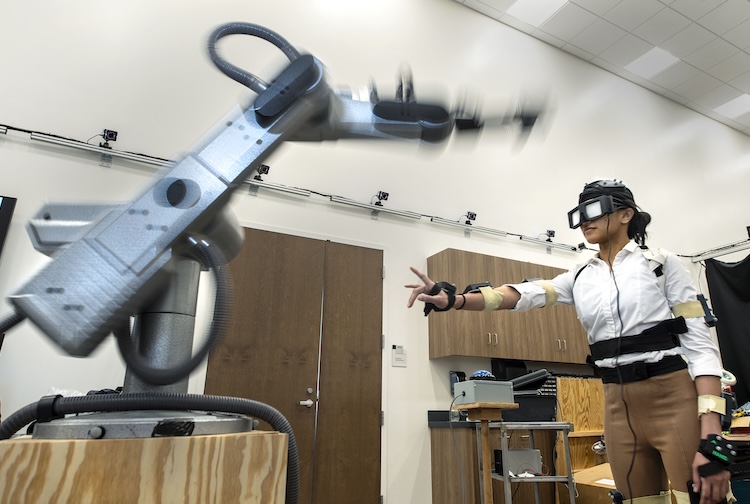
A team of researchers at the Virginia Commonwealth University College of Health Professions and College of Engineering are using robotic technology to better understand the long-term impacts that concussions can have on patients.
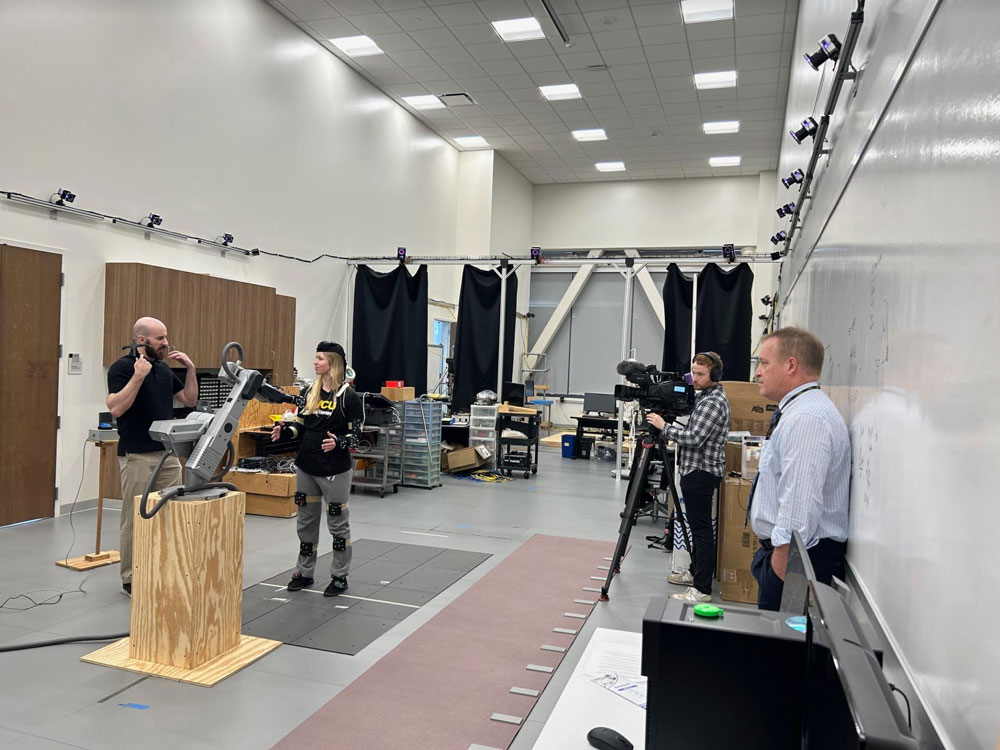
Transdisciplinary project is using robotics to advance concussion recovery
A VCU research team utilizes engineering approaches to study how concussions impact hand-eye coordination. (VCU Health)
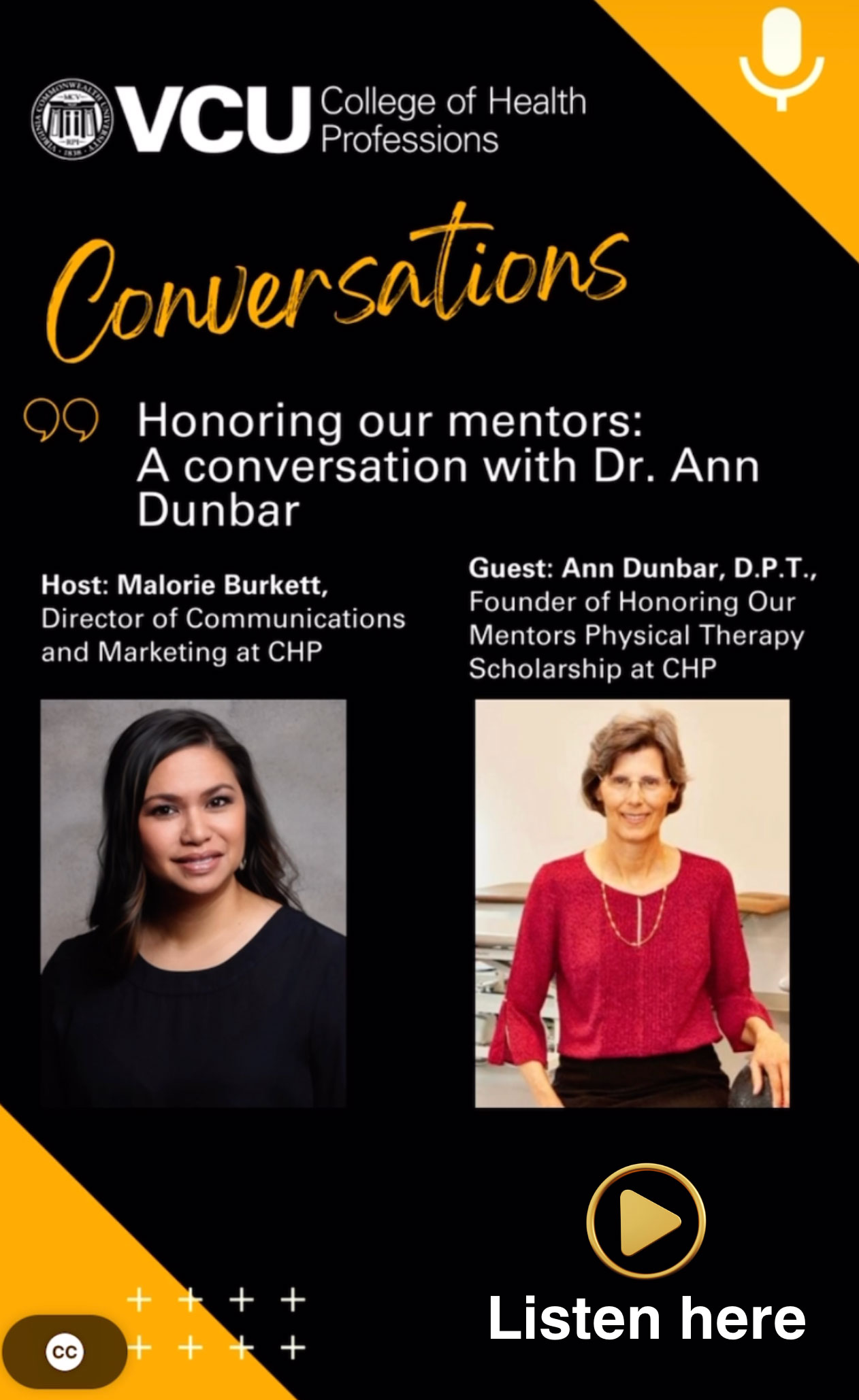
Honoring our mentors: A conversation with Dr. Ann Dunbar
In this episode we talk to Dr. Ann Dunbar, alumni of the physical therapy program and founder of the 'Honoring Our Mentors Physical Therapy Scholarship'.
Our Fall 2023 newsletter
In our latest newsletter, find an array of stories and other valuable insights about the program.

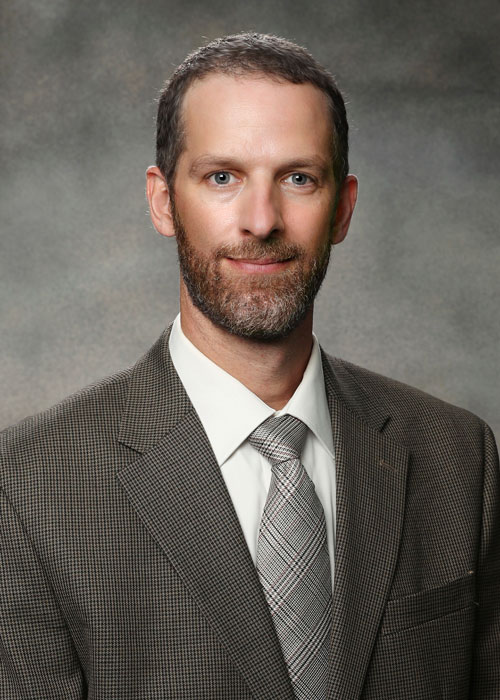
VCU College of Health Professions appoints Physical Therapy Chair
Virginia Commonwealth University’s College of Health Professions has appointed Benjamin Darter, P.T., Ph.D., chair of the Department of Physical Therapy.
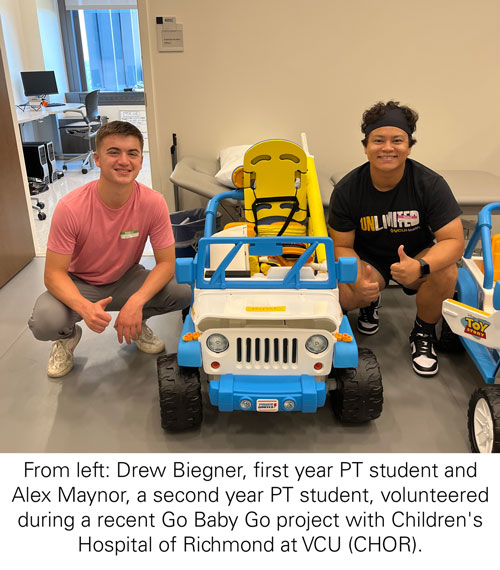
VCU collaboration gives children experience of mobility
A group of students in Virginia Commonwealth University’s Department of Physical Therapy in the College of Health Professions, was part of a volunteer project this month to help meet the needs of patients with significant mobility impairment at Children’s Hospital of Richmond at VCU (CHOR).
Virtual VCU worlds used to train, teach and treat in the real one
How researchers and faculty are building virtual reality applications to face society’s grand challenges.

College of Health Professions Alumni Spotlight: Evangeline Yoder, PT, MS, DHSC
Evangeline Yoder was first introduced to the physical therapy profession as a child while being treated by an orthopaedic surgeon in Richmond named Dr. Thomas Wheeldon.

Department of Physical Therapy names interim chair
Virginia Commonwealth University’s College of Health Professions has named Benjamin Darter, P.T., Ph.D., interim chair of the Department of Physical Therapy.
VCU Takes Top Honors at the VCU-Marquette Challenge
The ‘VCU-Marquette Challenge’ is a national competition in which physical therapy students compete to raise the most money to support APTA’s Foundation for Physical Therapy Research (FPTR).